Why Your Major Might Not Matter (And What Does Instead)
The T-Shaped Advantage teaches college students to build careers AI can't touch by combining deep expertise with strategic breadth. Learn the framework that turns career anxiety into opportunity through depth, curiosity, and integration thinking.
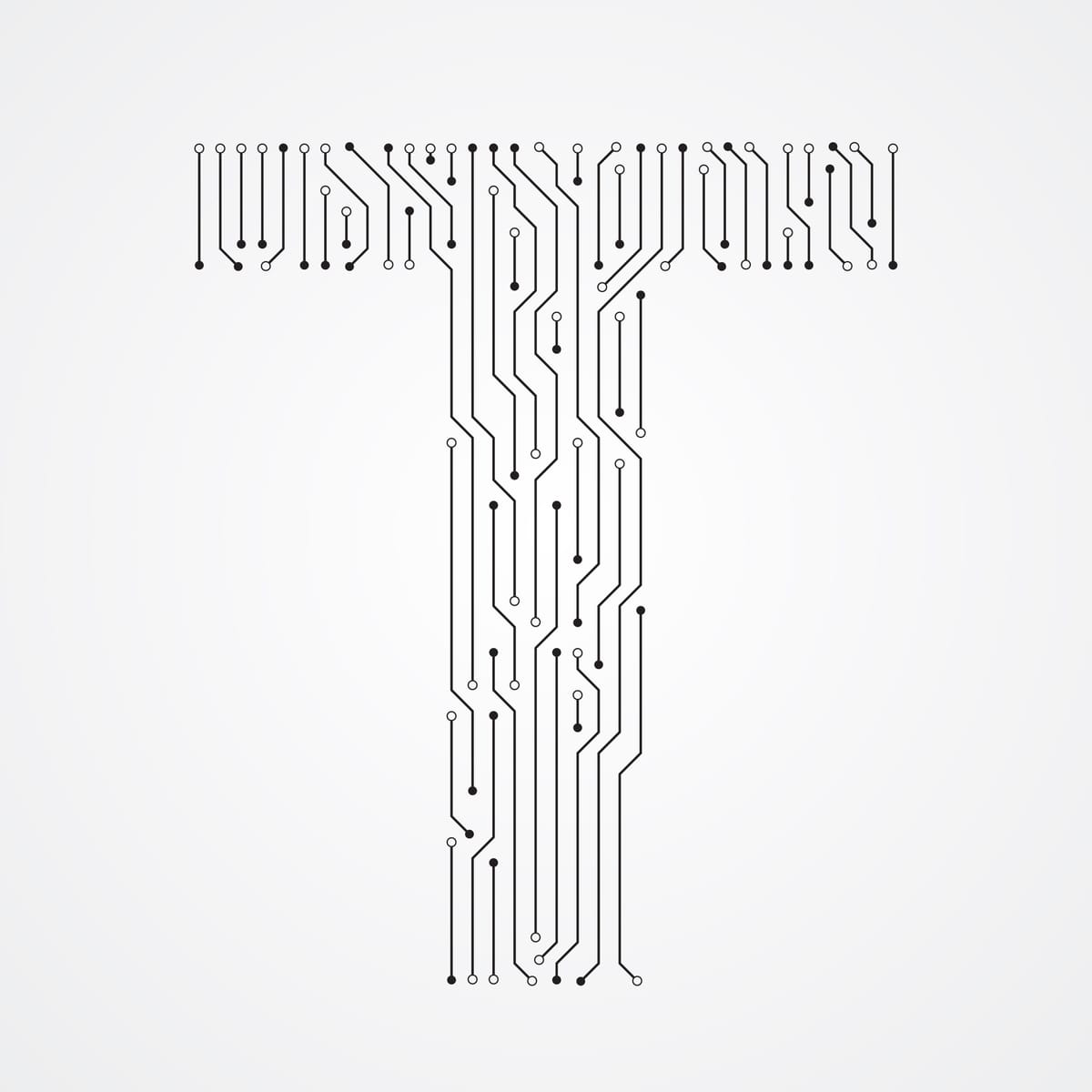
How smart students are building AI-proof careers with T-shaped thinking
The Panic Text That Changed Everything
Sarah Chen stared at her laptop screen, paralyzed. A computer science major entering her senior year, she'd just watched an AI tool generate in minutes what would have taken her hours to code. Her fingers hovered over her phone as she typed: "What's the point? If AI can do this, what can't it do?"
That text to her roommate captured what thousands of college students are feeling right now. The career advice that worked for previous generations—pick a major, get good at one thing, climb the ladder—suddenly feels obsolete.
But here's the plot twist: Three months after that panic text, Sarah landed her dream job at a healthcare startup. Not despite AI, but because she'd learned to work with it.
The difference? Sarah discovered she didn't need to be the best programmer. She needed to be the best at something else entirely.
The Great Career Myth We Need to Kill
We've been sold a lie: that your major determines your career, and your career determines your future.
This advice assumes the world stays still long enough for you to master one thing and ride it for 40 years. But consider these reality checks:
- 23% of jobs worldwide will transform by 2027 due to AI and automation
- 69 million new roles are being created as fast as old ones disappear
- The half-life of learned skills is shrinking from years to months
Translation: The world isn't waiting for you to become an expert in yesterday's skills.
The Old Playbook vs. The New Reality
OLD THINKING: "I'm a marketing major, so I'll work in marketing." "I studied computer science, so I'll be a programmer." "I have a business degree, so I'll climb the corporate ladder."
NEW REALITY:
- Marketing majors become behavioral data scientists
- Computer science students become AI ethics consultants
- Business majors become sustainability strategists
The pattern: The most valuable professionals don't fit into neat categories. They create their own.
Enter the T-Shaped Professional
Picture the letter T. Simple, right? But this shape represents the most powerful career strategy for the AI age.
THE T-SHAPED ADVANTAGE

The Vertical Bar (Your Depth): Specialized expertise in one domain where you build genuine mastery. Not just knowing tools, but understanding principles, seeing patterns, developing judgment.
The Horizontal Bar (Your Breadth): Ability to connect, translate, and integrate across disciplines. Not being a jack-of-all-trades, but being conversationally fluent in adjacent fields that amplify your expertise.
The Magic: When depth meets breadth, you solve problems that pure specialists miss and generalists can't handle.
The Evidence: Why T-Shaped Wins
The job market is already proving this. Look at the data:
Software Engineering Split
- Software Developers (system design, architecture): +17% growth projected
- Computer Programmers (routine coding): -10% decline projected
The difference? Software developers combine technical depth with business understanding, user empathy, and system thinking. Programmers just code.
Legal Profession Evolution
Despite AI's ability to draft contracts and analyze documents:
- 82.2% of 2024 law graduates secured jobs requiring bar passage (highest rate ever)
- Strategic legal roles are growing while document review gets automated
The survivors? Lawyers who combine legal expertise with technology understanding, business acumen, and client psychology.
The Universal Pattern
Routine work → AI takes over Complex, integrative work → Humans thrive
Real Students, Real Transformations
Marcus - Data Science Major The Problem: Could build machine learning models but struggled in his first internship because he didn't understand business context. The T-Shaped Solution: Added marketing and psychology courses. Now works as a "customer behavior AI specialist" at a Fortune 500 company.
Amy - UX Design Major
The Problem: Good technical skills but couldn't stand out in a crowded field. The T-Shaped Solution: Took psychology classes and volunteered at a medical clinic. Landed her dream job as a "healthcare UX specialist" at a health tech startup.
David - Biology Major The Problem: Worried AI would replace lab work and research analysis. The T-Shaped Solution: Learned data science and business fundamentals. Now helps pharmaceutical companies integrate AI into drug discovery as a "biotech AI strategist."
The Pattern: None of them abandoned their major. They amplified it with strategic breadth.
Your T-Shaped Identity Assessment
Before we go further, let's see where you stand. Rate yourself honestly (1-5 scale):

SCORING:
- 20-25: You're developing a strong T-shape
- 15-19: Good foundation, pick depth or breadth to focus on
- 10-14: Time to choose your development priority
- Under 10: Perfect starting point—lots of room to grow
The Intersection Sweet Spots (Where Careers Are Born)
The most valuable professionals work at intersections. Here's where the opportunities are exploding:
HIGH-VALUE INTERSECTION OPPORTUNITIES

Your Intersection Formula: [Your Major] × [Strategic Adjacent Field] = [Your Unique Career Category]
Examples:
- Marketing × AI Ethics = Responsible Growth Strategist
- Education × Virtual Reality = Immersive Learning Designer
- Finance × Psychology = Behavioral Investment Analyst
The Mindset Shift That Changes Everything
Here's the reframe that transforms career anxiety into career advantage:
From Scarcity to Opportunity
Old Thinking: "AI is taking jobs away" T-Shaped Thinking: "AI is creating new problems that need human solutions"
From Competition to Creation
Old Thinking: "I need to be better than everyone else in my field" T-Shaped Thinking: "I need to create a field where I'm the obvious choice"
From Prediction to Preparation
Old Thinking: "I need to pick the right career path"
T-Shaped Thinking: "I need to build adaptive capacity"
The Identity Shift: You're not just a [major] major looking for [field] jobs. You're a bridge builder, a value creator, a problem solver who works at the intersections others can't see.
Your Next Steps: The T-Shaped Starter Kit
Don't try to transform everything at once. Start with these three moves:
This Week: The Assessment
- Complete the T-Shaped Identity Assessment above
- Identify your current depth area (probably your major, but maybe not)
- List 3 adjacent fields that could amplify your expertise
- Find one T-shaped professional to follow on LinkedIn
This Month: The Exploration
- Have one coffee chat with someone from an adjacent field
- Take one online course outside your comfort zone
- Practice the translation exercise: Explain your field to someone from a different domain
- Document one unexpected connection between your field and another
This Semester: The Integration
- Design one project that combines your depth with new breadth knowledge
- Update your personal narrative around your T-shaped development
- Look for opportunities that require interdisciplinary thinking
- Start building your intersection expertise
The Promise: What T-Shaped Gets You
When you develop T-shaped skills, you don't just prepare for a job—you become a new kind of professional:
🌉 A Bridge Builder who connects insights across domains 💡 A Value Creator who solves problems that require both depth and breadth 🔄 An Adaptive Expert who thrives on change rather than fearing it
🤝 A Human-AI Collaborator who amplifies technology rather than competing with it
Most importantly: You stop worrying about AI replacing you and start figuring out how to work with it.
The Bottom Line
Your major matters, but not in the way you think. It's not your destination—it's your starting point.
The students who thrive in the next decade won't be the ones who picked the "right" major. They'll be the ones who learned to think in T-shapes, who built careers at intersections, who created their own categories.
Sarah figured this out. Three months after her AI panic, she's not just employed—she's irreplaceable. Because while AI can code, it can't combine programming expertise with healthcare knowledge and user empathy to build medical tools that doctors actually want to use.
That's her intersection. What's yours?
Ready to Build Your T-Shaped Advantage?
This is just the beginning. In our next article, we'll dive deep into building the "vertical bar"—how to develop expertise that AI can't replicate.
But don't wait. Start your T-shaped journey today:
- Complete the assessment above
- Choose one adjacent field to explore this month
- Have one conversation with someone outside your major
- Share this framework with one friend who's feeling career anxiety
Remember: You don't need a crystal ball to predict the future. You need a compass to navigate whatever comes next.
Your T-shaped adventure starts now.
Coming next: "Building Your Depth: How to Become Irreplaceably Good" - The definitive guide to developing expertise that grows stronger alongside AI.