The Irreplaceable Human: How Soft Skills Evolved Through 260 Years of Technological Change
After studying 260 years of workplace transformation, I discovered something that completely shifted my understanding: each technological revolution has made distinctly human abilities MORE valuable, not less.
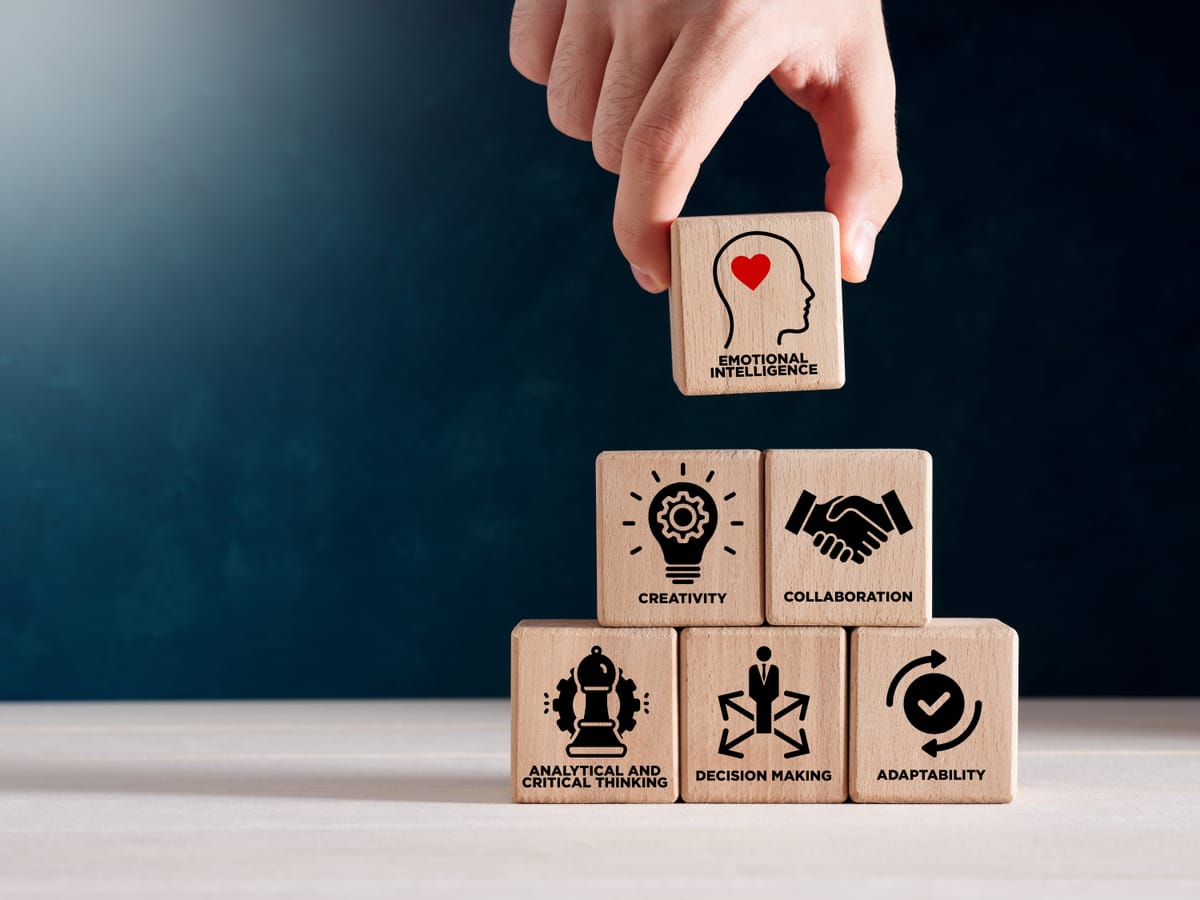
How five industrial revolutions reveal that the most "human" skills become more valuable as machines get smarter
The Pattern That Changes Everything
The story we usually hear about industrial revolutions focuses on machines: steam engines in the 1800s, assembly lines in the early 1900s, computers in the late 1900s, and AI today. But after studying 260 years of workplace transformation, I discovered something that completely shifted my understanding of human progress.
Instead of making humans less valuable, each technological revolution has made distinctly human abilities MORE important. This isn't just historical curiosity—it's the key to understanding why you'll be more valuable in an AI-powered future, not less.
"Each successive wave of automation, while often engendering fears of widespread job displacement, has historically catalyzed the creation of new job roles and a redefinition of human contributions."
What I found challenges the fundamental anxiety of our time: that machines will replace us. History suggests something far more optimistic.
The Four-Step Dance Between Humans and Machines
Every industrial revolution follows the same choreography, and once you see it, you can't unsee it.
| Step | What Happens | Historical Example |
|---|---|---|
| 1 | New technology automates existing human tasks | Steam engines replace human/animal muscle power |
| 2 | This creates anxiety about job loss | Factory workers fear unemployment |
| 3 | But it actually creates demand for NEW types of human skills | Need for punctuality, teamwork, following instructions |
| 4 | These new skills are always more complex and more "human" | Coordination and discipline vs. raw physical strength |
Steam engines didn't eliminate human work—they eliminated the need for human muscle power and created demand for human coordination skills. Computers didn't eliminate human thinking—they eliminated routine calculations and created demand for creative problem-solving.
The pattern is so consistent it's almost predictable: AI won't eliminate human value—it will eliminate routine cognitive work and create demand for emotional intelligence, ethical reasoning, and creative collaboration.
Five Revolutions, Five Leaps Forward
Let me walk you through each revolution and show you exactly how this pattern played out, revealing why your most human qualities are about to become your most valuable assets.
Revolution 1: When Steam Engines Taught Us to Be Human (1760-1840)
Picture yourself as a farmer in 1800. You've worked by sunrise and seasons your entire life, waking when roosters crow, working when weather permits, resting when darkness falls. Your grandfather worked this way. His grandfather worked this way. For centuries, human work followed natural rhythms.
Then suddenly, there's this building where steam engines run exactly 12 hours a day, whether it's sunny or raining, summer or winter. The machine doesn't care if you're tired, if your child is sick, or if it's harvest time at home.
| Previous Work Style | New Requirement | Why It Mattered |
|---|---|---|
| Work when sun rises | Punctuality | Steam engines don't wait for stragglers |
| Make whole products | Following complex instructions | Factory work required precision |
| Work alone/with family | Working in teams | Coordinating in noisy, dangerous places |
The transition demanded entirely new human capabilities. Punctuality became a premium skill because steam engines don't wait—if you're late, the entire production line suffers. Workers had to learn to follow complex instructions because factory work required precision that craft work never demanded. Most challenging of all, they had to develop teamwork skills for coordinating with others in noisy, dangerous environments where a moment's miscommunication could cause serious injury.
"The factory system involved the establishment of large-scale manufacturing facilities where labor, machinery, and raw materials were brought together under one roof, leading to a new division of labor that transformed how goods were produced."
Here's what's remarkable: even in the age of steam and steel, the workers who succeeded weren't necessarily the strongest—they were the most disciplined and adaptable. Physical strength mattered less than the ability to synchronize human behavior with mechanical rhythms. The Industrial Revolution's first lesson was that human value lay not in competing with machines, but in developing capabilities that made human-machine collaboration possible.
Revolution 2: When Electricity Created the Modern Manager (1870-1914)
By 1870, electricity changed everything—not just because it powered bigger machines, but because it enabled something unprecedented: truly massive organizations. Companies that once employed dozens now employed thousands. The telephone connected New York to San Francisco. The telegraph linked London to Mumbai.
Imagine trying to coordinate a thousand people spread across multiple buildings, departments, and time zones using only face-to-face conversation. Impossible. This technological leap created an entirely new category of human work: the professional manager.
| Previous Work Style | New Requirement | Why It Mattered |
|---|---|---|
| Face-to-face local communication | Written business communication | Needed to coordinate across distances |
| Individual craft mastery | Management and supervision | Someone had to organize thousands of people |
| Serving known community members | Customer service for strangers | Mass production meant serving unknown customers |
| Simple oral instructions | Complex procedural following | Large organizations required standardized processes |
Written communication became essential because you couldn't manage a thousand-person company through spoken words alone. Clear memos, detailed reports, and systematic documentation became the backbone of corporate efficiency. Someone needed to develop management and supervision skills to coordinate all those people working in different departments, often in different buildings or even different cities.
Perhaps most significantly, this era created the need for customer service skills as businesses moved from serving neighbors they knew personally to serving strangers they would never meet. This required developing empathy and communication abilities that could work across cultural and social boundaries.
"The growth of large corporations and complex business organizations led to the consolidation of industries and the emergence of multi-layered, hierarchical management structures."
The electricity revolution revealed something profound: technology didn't eliminate human communication—it made skilled human communication more valuable by enabling more complex forms of collaboration. The telephone was just a tool; the real innovation was learning how to build trust and coordinate effectively with people you might never meet in person.
Revolution 3: When Computers Made Thinking the New Currency (1950s-2000s)
The arrival of computers in the 1950s created something humanity had never seen before: an economy where massive numbers of people were paid primarily for thinking rather than physical work. This wasn't just a job shift—it was a complete redefinition of what "work" meant.
Suddenly, your brain became your primary tool. But here's what's fascinating: as computers got better at calculation and data processing, humans didn't become obsolete. Instead, we became specialists in the kinds of thinking that computers couldn't do.
| Industrial Age Skill | Digital Age Evolution | New Human Value |
|---|---|---|
| Physical strength and endurance | Operating computer systems | Learning how to learn new systems |
| Following fixed procedures | Adapting to software updates | Flexibility and continuous learning |
| Local information sources | Internet research capabilities | Critical evaluation of digital information |
| Face-to-face teamwork | Email and digital collaboration | Clear written communication across distances |
| Hierarchical communication | Network-based information sharing | Initiative and self-directed work |
Learning agility became essential because technology changed so rapidly that specific skills became obsolete within years rather than decades. A programmer who learned COBOL in 1970 needed to learn C++ in 1985, Java in 1995, Python in 2005, and JavaScript frameworks that changed annually after 2010.
Workers had to develop information evaluation skills because the internet democratized publishing—suddenly anyone could create content that looked authoritative. The ability to distinguish reliable from unreliable sources became as important as literacy itself.
Digital collaboration required new forms of social intelligence. Working effectively via email, early collaboration platforms, and remote communication demanded clearer written expression and more deliberate relationship-building than face-to-face work environments.
"The introduction of computers and early robotics led to the automation of routine tasks, particularly in clerical work and manufacturing, resulting in shifts in employment patterns with some roles declining and new roles emerging."
The computer revolution taught us that machines handle information processing, but humans handle meaning-making. Computers could crunch numbers faster than any human, but they couldn't understand what those numbers meant in the context of human relationships, cultural values, or long-term consequences.
Revolution 4: When AI Became Our Colleague (2000s-Present)
By 2000, something unprecedented happened: machines began doing work that we thought only humans could do. The internet connected billions of devices. AI systems started recognizing patterns, making predictions, and even making decisions. Robots became smart enough to work safely alongside humans without cages or barriers.
This wasn't just better automation—it was the birth of human-machine collaboration.
| Previous Capability | AI/Automation Enhancement | Required Human Evolution |
|---|---|---|
| Data analysis by spreadsheet | AI processes millions of data points | Interpreting AI insights for real-world application |
| Individual decision-making | AI provides predictive recommendations | Ethical reasoning about when to follow/override AI |
| Tool-based work | Collaborative robots (cobots) | Social skills for human-machine teams |
| Linear problem-solving | AI explores multiple scenarios simultaneously | Systems thinking and complexity management |
| Departmental expertise | Cross-functional AI platforms | Interdisciplinary communication and translation |
Success in this era required developing AI collaboration skills—learning to work WITH intelligent machines rather than simply using them as tools. This meant understanding when AI recommendations should be trusted, when they should be questioned, and when human judgment should override algorithmic suggestions.
Data interpretation became crucial as AI systems could process vast amounts of information, but humans needed to understand what these insights meant in real-world contexts. A marketing AI might identify customer patterns, but humans needed to understand the cultural and emotional factors that explained those patterns.
Ethical reasoning emerged as a universal requirement. Every AI application—from hiring algorithms to medical diagnostics—raised questions about fairness, bias, and social impact that required sophisticated human judgment.
"Advanced Robotics and Collaborative Robots (Cobots) are a significant leap from earlier automation. These robots are more intelligent, flexible, and capable of performing complex tasks, often working safely alongside human workers in shared environments."
The Fourth Industrial Revolution created the first era where humans and machines became genuine partners rather than operators and tools. This partnership demanded new social skills—for interacting effectively with both humans and AI systems.
Revolution 5: When Technology Finally Put Humans First (Present-2030s)
Today, we're living through the Fifth Industrial Revolution, and it's unlike anything that came before. AI systems can now write, create art, compose music, and solve complex problems that previously required human intelligence. But here's what makes this revolution different: it's explicitly designed to enhance human capabilities rather than replace them.
For the first time in industrial history, we're consciously designing technology with human flourishing as the primary goal.
| Fourth Revolution Focus | Fifth Revolution Shift | Human Skill Implication |
|---|---|---|
| Efficiency optimization | Human flourishing optimization | Designing technology that serves human values |
| Automated decision-making | Human-AI collaborative decision-making | Maintaining human agency and oversight |
| Data-driven insights | Wisdom-informed applications | Combining AI capability with human judgment |
| Technological advancement | Sustainable technological integration | Long-term thinking and environmental consciousness |
| Individual productivity | Collective problem-solving | Systems thinking for global challenges |
This revolution demands emotional intelligence in digital environments as more work happens through screens and AI interfaces, yet humans still need genuine connection and motivation. Creative collaboration with AI goes beyond using AI as a tool—it involves genuine partnership where humans provide vision, values, and creative direction while AI contributes computational power and pattern recognition.
Systems thinking becomes essential for understanding how AI decisions ripple through social, economic, and environmental systems. When we deploy AI in education, healthcare, or governance, someone needs to consider not just immediate efficiency gains but long-term impacts on human development and social equity.
Continuous learning agility reaches new importance because AI capabilities improve monthly rather than yearly. The most valuable professionals will be those who can continuously discover new ways to leverage AI while maintaining their own creative edge and ethical judgment.
"The Fifth Industrial Revolution incorporates sustainability and resilience into the technological development process, addressing concerns that were largely overlooked in the Fourth Industrial Revolution."
This revolution is the first where humans are consciously designing technology to enhance human flourishing rather than just increase efficiency. Success requires wisdom skills—the ability to guide powerful technology toward purposes that serve long-term human and planetary well-being.
Why Every Revolution Makes the Same Promise
You might wonder: why does every technological revolution end up making human skills more valuable instead of less? The answer lies in four fundamental forces that have remained constant throughout history.
The Complement Effect shows us that when machines get better at one thing, they often make human skills in related areas more valuable. AI's ability to analyze data quickly makes human creativity and intuition more precious, not less. When calculators became common, we didn't need fewer mathematicians—we needed people who could think about what the calculations meant and how to apply them creatively.
The New Problems Principle demonstrates that every technology solves old problems but creates new ones. Cars solved transportation problems but created traffic, pollution, and urban planning challenges that required new human skills. The internet solved information access problems but created cybersecurity, digital literacy, and online relationship challenges that demand sophisticated human judgment.
The Human Connection Constant reveals that no matter how sophisticated technology becomes, humans still need to connect with other humans. As more interactions become digital, the people who can create authentic human connections become more valuable. A chatbot might answer customer questions efficiently, but when someone has a complex problem or feels frustrated, they want to talk to a human who can truly understand their situation.
The Complexity Amplifier shows us that more powerful technology creates more complex systems, which require more sophisticated human management. Managing an AI system requires much more nuanced skills than managing a steam engine. AI systems need ethical oversight, creative direction, and cultural sensitivity—all distinctly human capabilities.
Nine Skills That Define Human Value in the AI Era
Based on this historical analysis and current research from the World Economic Forum, nine skills emerge as crucial for thriving in the AI era. These fall into four interconnected categories that build upon each other.
Thinking Skills: The Foundation of Human-AI Partnership
Critical Thinking About AI-Generated Information represents perhaps the most immediate need. As AI systems become capable of producing highly convincing content, humans must develop sophisticated evaluation skills. This means learning to spot inconsistencies, verify AI-generated facts, and understand when AI confidence might be misplaced. For example, when an AI suggests a marketing strategy, someone needs to ask whether it truly understands the cultural context and potential unintended consequences.
Complex Problem-Solving in Ambiguous Situations becomes essential because AI excels with clearly defined problems but struggles with messy human realities. Consider mediating a workplace conflict—there's no "correct" answer that an algorithm can calculate, but human judgment can navigate the emotions, relationships, and unspoken dynamics that matter most.
Systems Thinking and Long-Term Reasoning helps us understand how AI decisions ripple through interconnected social, economic, and environmental systems. When we deploy AI hiring tools, someone needs to consider not just efficiency gains but potential impacts on diversity, community employment, and social equity over time.
Creative Skills: Where Human Imagination Meets AI Capability
Creative Collaboration with AI Systems goes far beyond using AI as a tool. It involves genuine partnership where humans provide vision, context, and creative direction while AI contributes capability and speed. Think of a designer working with AI to create sustainable packaging—the human provides aesthetic sense and environmental values while AI generates and refines countless variations.
Learning Agility and Adaptation becomes crucial because AI capabilities evolve monthly rather than yearly. The most valuable professionals will be those who treat learning as a daily practice, continuously discovering new ways to leverage AI while maintaining their own creative edge and critical judgment.
People Skills: The Irreplaceable Human Element
Emotional Intelligence in Digital Environments gains premium value as more interactions happen through screens and platforms. Leaders who can maintain team cohesion, build trust, and inspire motivation across virtual teams become indispensable. This skill involves reading subtle emotional cues in digital communication and creating genuine human connections despite technological mediation.
Cross-Disciplinary Communication becomes essential for tackling complex challenges that span multiple fields. Climate change solutions, for instance, require environmental scientists, policy experts, community organizers, and technologists to work together effectively. Professionals who can translate between different domains of knowledge become bridges for innovation.
Change Leadership and Human-Centered Management addresses the reality that while technology changes rapidly, humans need support to adapt. Effective leaders help teams integrate AI tools while ensuring people feel valued rather than replaced, maintaining focus on human development alongside technological implementation.
Wisdom Skills: Navigating the Ethical Landscape
Ethical Reasoning and Responsible Innovation emerges as a universal requirement rather than a specialized concern. Every AI application—from recommendation algorithms to automated decision-making systems—raises questions about fairness, privacy, and social impact. Professionals across all fields need the ability to identify ethical implications and advocate for responsible deployment of powerful technologies.
These nine skills interconnect and reinforce each other. Ethical reasoning informs creative collaboration. Systems thinking enhances change leadership. Learning agility supports all the others. Together, they represent what makes humans most valuable in an AI-augmented world: our capacity for wisdom, creativity, empathy, and moral reasoning.
What This Means for Students and Rising Professionals
Building Your Irreplaceable Advantage
Focus on skills that complement AI rather than compete with it. Instead of just learning facts that AI can access instantly, develop the ability to ask good questions, think creatively, and connect ideas across disciplines. Practice human-AI collaboration now by using AI tools like ChatGPT, but maintain your own critical thinking and creativity. Learn to be a good partner to AI, not a passive consumer.
Develop global and cultural competence because AI might be similar everywhere, but human contexts vary dramatically. Understanding cultural differences and global perspectives becomes more valuable as AI handles more routine work.
For Educators: Preparing the Next Generation
Redesign curricula around human-AI collaboration rather than banning AI tools. Teach students how to use them ethically and effectively while developing distinctly human capabilities. Emphasize experiential learning where students practice applying knowledge in messy, real-world situations where AI can provide information but humans must provide judgment.
Focus on interdisciplinary thinking because the most interesting problems require combining insights from multiple fields—something humans do better than current AI systems.
For International Students: Your Cultural Advantage
Leverage your cultural diversity because your different perspectives and experiences are exactly what global, AI-integrated teams need. Cultural intelligence becomes more valuable, not less, in an AI world.
Focus on language as a bridge, not just a barrier. Multilingual people who can facilitate communication across cultures and between humans and AI systems will be highly valued.
Develop confidence in your unique human contributions. AI might help level the playing field in technical skills, but your personal experiences, cultural insights, and human perspectives can't be replicated.
The Optimistic Truth About Our Future
Here's what 260 years of industrial revolutions teach us: humans don't become obsolete—we become more distinctly human.
"The trajectory of human civilization is inextricably linked to a series of industrial revolutions that have not only redefined technological paradigms but have also fundamentally reshaped the very nature of human work and the competencies deemed essential for participation in the workforce."
Each revolution has asked the same question: "What can humans do that machines cannot?" And each time, we've discovered new depths of human potential: physical coordination led to mental analysis, which led to creative thinking, which led to emotional intelligence, which now leads to ethical wisdom.
The pattern is clear: as machines become more capable, humans become more human.
The future doesn't belong to humans OR machines—it belongs to humans who can skillfully collaborate with machines while maintaining what makes us distinctly human: our creativity, empathy, ethical reasoning, and ability to find meaning in our work.
Your Role in the Next Chapter
We're living through the most dramatic skills transformation in human history. Unlike previous revolutions that unfolded over generations, this one is happening in real-time. The students and scholars reading this will help write the next chapter of this story.
You'll decide whether AI enhances human flourishing or diminishes it. You'll determine whether technology serves human values or replaces them. The key insight from history is simple: every generation has faced the fear that new technology would make humans obsolete. Every generation has discovered instead that technology revealed new possibilities for human development.
Your generation's challenge is to ensure that as AI becomes more intelligent, humans become more wise. As AI becomes more powerful, humans become more thoughtful about how to use that power.
That's not just an academic exercise—it's the most important work of our time.
Reflection Questions
As you consider the historical patterns and contemporary implications explored in this analysis, take time to reflect on your own position within this ongoing transformation. These questions are designed to help you connect the broad historical trends to your personal and professional development.
Understanding Your Current Skills Landscape
Where do you stand in the skills evolution? Look at your current capabilities and consider which era they primarily reflect. Are you still operating with Third Industrial Revolution skills like basic computer literacy and routine problem-solving in a Fifth Industrial Revolution world? Or have you already begun developing AI-era competencies like creative collaboration with intelligent systems and ethical reasoning about technology use?
What uniquely human strengths do you bring to your work? Reflect deeply on moments when you've added value that no machine could replicate. Perhaps it was reading between the lines in a difficult conversation, finding creative solutions under pressure, or helping someone feel understood during a challenging time. These experiences reveal your distinctly human capabilities that become more valuable as AI handles routine tasks.
Examining Your Learning Approach
How has your approach to learning evolved? Consider whether you're still trying to accumulate fixed knowledge or whether you've shifted toward developing learning agility. In an era where AI can access vast information instantly, your ability to ask good questions, synthesize diverse perspectives, and adapt continuously becomes more important than what you currently know.
What assumptions about technology and human value might you need to reconsider? Many of us carry unconscious beliefs that technological advancement threatens human relevance. How might viewing AI as a potential collaborator rather than competitor change your professional development strategy?
Envisioning Your AI-Integrated Future
In what specific ways could AI enhance rather than replace your contributions? Think concretely about your current work or academic focus. How might AI tools handle routine aspects of your tasks, freeing you to focus on higher-level thinking, creative problem-solving, or deeper human connection? This isn't about AI doing your job—it's about AI enabling you to do the most human aspects of your job more effectively.
What ethical considerations matter most in your field? As AI capabilities expand into your area of expertise, what questions of fairness, privacy, transparency, or social impact become most pressing? How can you develop the wisdom to navigate these challenges responsibly?
Planning Your Development Path
Which of the nine essential skills represents your greatest growth opportunity? Rather than trying to develop all skills simultaneously, consider which one or two would most significantly enhance your ability to thrive in an AI-integrated environment. How could you begin practicing these skills in your current context?
How can you cultivate a growth mindset about human-AI collaboration? What specific steps could you take to become more comfortable working with AI tools while maintaining your own creative and critical thinking capabilities? This might involve experimenting with AI assistants, seeking out human-AI collaboration opportunities, or simply practicing the art of asking AI systems better questions.
Contributing to the Broader Conversation
What role do you want to play in shaping our AI-integrated future? History shows that each generation has influenced how new technologies develop and integrate into society. How do you want to contribute to ensuring that AI development serves human flourishing rather than diminishing it?
How can your unique background and perspective enrich human-AI collaboration? Especially for international students and those from diverse cultural backgrounds, consider how your different ways of thinking, problem-solving, and relating to others represent exactly the kind of human diversity that AI-integrated teams need most.
These reflections aren't meant to be answered quickly or definitively. They're ongoing questions that can guide your development as you navigate this remarkable period of human and technological co-evolution. The goal isn't to have all the answers but to remain thoughtfully engaged with the questions that will shape our shared future.
References
- Britannica. "History of the organization of work | Industrial Revolution, Labor..." Retrieved from: https://www.britannica.com/money/history-of-the-organization-of-work
- Second Industrial Revolution. Wikipedia. Retrieved from: https://en.wikipedia.org/wiki/Second_Industrial_Revolution
- U.S. Bureau of Labor Statistics. "The computer revolution: an economic perspective." Monthly Labor Review, 1996. Retrieved from: https://www.bls.gov/opub/mlr/1996/08/art1full.pdf
- Iberdrola. "What is the Fourth Industrial Revolution and its technologies." Retrieved from: https://www.iberdrola.com/innovation/fourth-industrial-revolution
- Solutions Driven. "Industry 4.0: Essential Skills for the Modern Workforce." Retrieved from: https://solutionsdriven.com/report/industry-4-0-essential-skills-for-the-modern-workforce/
- World Economic Forum. "The Future of Jobs Report 2025: Skills outlook." Retrieved from: https://www.weforum.org/publications/the-future-of-jobs-report-2025/in-full/3-skills-outlook/
- Murata Manufacturing Co., Ltd. "What is the 'Fifth Industrial Revolution,' Which Will Deepen." Retrieved from: https://article.murata.com/en-us/article/what-is-the-fifth-industrial-revolution
- PwC. "Decoding the Fifth Industrial Revolution: Marching towards a resilient, sustainable and human-centric future." March 2024. Retrieved from: https://www.pwc.in/assets/pdfs/decoding-the-fifth-industrial-revolution-v1.pdf
- Bethel University. "Why AI requires emotional intelligence—and how leaders can adapt." Retrieved from: https://www.bethel.edu/blog/ai-requires-emotional-intelligence/
- America Succeeds. "The Future of Work is Human: Why Durable Skills Are the Key to Workforce Success." Retrieved from: https://americasucceeds.org/the-future-of-work-is-human-why-durable-skills-are-the-key-to-workforce-success
This analysis represents ongoing research into the relationship between technological advancement and human capability development. We invite academic colleagues to contribute to this dialogue through collaborative research and cross-disciplinary engagement.