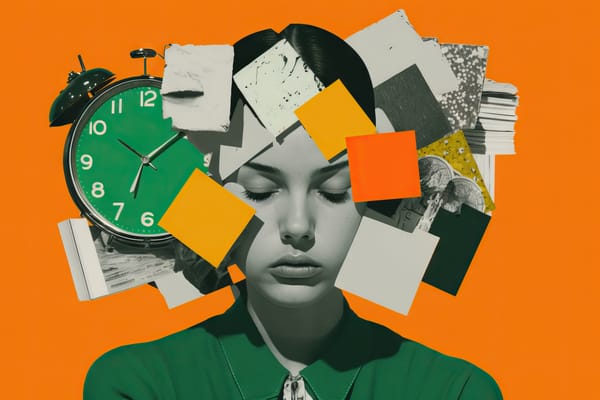
The Comparison Trap: Why Everyone Else's Timeline is Making You Miserable
The average person checks their phone 96 times per day, but we're not looking for information—we're looking for reassurance that we're not falling behind. Here's why social media makes us feel perpetually insufficient, and what to do about it.
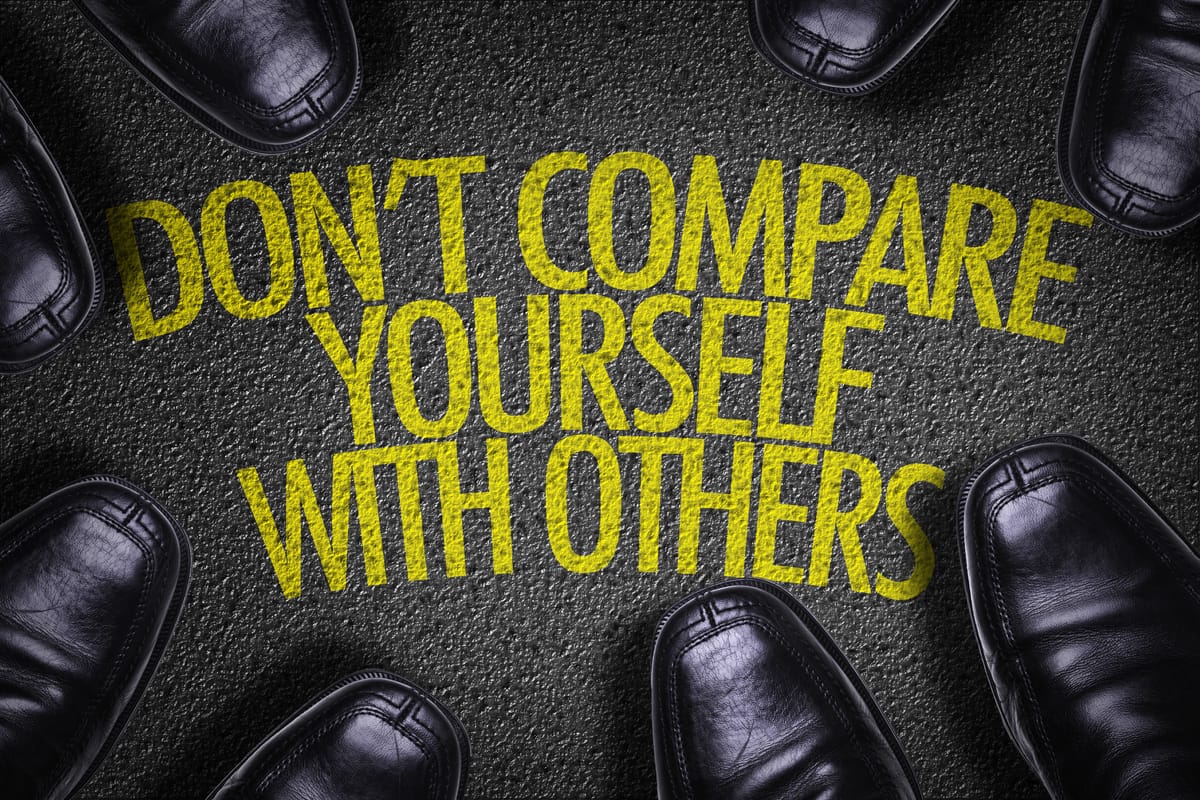
On why we feel perpetually behind in a world that never stops moving, and what ancient wisdom can teach us about finding our own pace
The average person checks their phone 96 times per day, but we're not looking for information—we're looking for reassurance that we're not falling behind.
It usually starts late at night. I'm lying in bed, supposedly winding down, when I reach for my phone for what I tell myself will be a "quick scroll"—just ten minutes to decompress. Instagram first, then LinkedIn, maybe a few tweets for good measure. The blue light burns my retinas as I scroll, but I can't stop. My heart rate actually increases—I can feel it—as another perfectly curated life unfolds before me: someone just got promoted to VP at twenty-eight. Someone else launched a startup that's already profitable. Another person is posting from a meditation retreat in Iceland with the hashtag #GrindNeverStops.
I close the app and feel it immediately—that familiar knot in my stomach, that low-grade panic whispering that I'm already behind. Not "just a little behind" or "a few steps off track," but chronically, existentially behind, like I'm losing a race I never consciously entered but somehow can't stop running.
This feeling has become so common it barely registers as abnormal anymore. We live in a world obsessed with speed, where velocity has become virtue and "early adopter" status signals intelligence. Where being slow means being lazy, indecisive, or worst of all—irrelevant. But where does this anxiety actually come from? And why does a simple scroll through social media leave so many of us feeling breathless and insufficient?
When Your Brain Betrays You
The answer begins deep inside our skulls, in neural circuits that haven't updated their software in millennia. As research into the neuroscience of anxiety reveals, our brains are still running on hardware designed for a very different world. The amygdala—our brain's primary threat detector—evolved to keep us alive when dangers were immediate, physical, and often fatal. A rustling bush might contain a predator. A shortage of food could mean starvation. These were real threats requiring instant, life-preserving responses.
But in 2025, our amygdala fires just as intensely when we see someone's promotion announcement or vacation photos. The brain that once scanned the horizon for lions now scans LinkedIn for signs that everyone else is moving faster, achieving more, living better. Our ancient alarm system can't distinguish between a saber-toothed tiger and a startup success story—both trigger the same cascade of stress hormones, the same urgent sense that we need to act now or face extinction.
This creates an entirely new category of human suffering: not the fear of physical harm, but the fear of falling behind. It's a social, existential dread that tells us we must do more, be more, post more, just to keep pace with the endless parade of other people's highlight reels.
This neurological hijacking comes with real costs. Studies show that people who spend more than three hours daily on social media report double the rates of anxiety and depression. But here's what researchers are just discovering: LinkedIn reports that 70% of people who appear "successful" on social media privately describe feeling like imposters. The people we're comparing ourselves to are often struggling with the exact same feelings of inadequacy.
Are You Caught in the Comparison Trap?
Warning signs that other people's timelines are controlling your life:
- You feel anxious within minutes of opening social media
- You make decisions based on how they'll look online
- You avoid posting about your real interests because they're not "impressive" enough
- You've delayed major life decisions because you feel "behind"
- You know more about your acquaintances' careers than your own goals
- You find yourself justifying your choices to imaginary critics
But the damage goes deeper than mental health statistics. When we're constantly measuring ourselves against others, we make worse decisions—choosing careers that look impressive rather than feel meaningful, pursuing relationships that photograph well rather than bring joy, optimizing for metrics that matter to strangers rather than values that matter to us.
I learned this the hard way three years ago when I turned down a dream job opportunity because it would have meant starting over in a new field. My college friends were becoming directors and VPs, and the idea of being a "junior" anything felt like admitting defeat. I stayed in a role that paid well and impressed people at dinner parties but slowly crushed my spirit. The promotion announcements I was so afraid of falling behind had cost me the chance to do work I actually cared about.
The Invention of Universal Competition
Picture yourself as a farmer in 1800. Your sense of success, your understanding of "enough," was largely determined by your immediate community—perhaps a few dozen families within walking distance. You knew if your crops were thriving compared to your neighbor's, if your children were healthy, if you had sufficient stores for winter. Your reference group was small, knowable, and physically present.
Now imagine trying to maintain that same psychological equilibrium while simultaneously comparing yourself to millions of strangers across the globe, each presenting their most polished, optimized version of reality. Every promotion, every vacation, every perfectly plated meal becomes potential evidence of your own inadequacy. We've gone from competing with our village to competing with the entire visible universe.
Social media platforms have inadvertently created what we might call "universal competition"—a state where every human achievement becomes a potential source of personal anxiety. The algorithms that power these platforms make this worse by design. Their business model depends on engagement, and research consistently shows that emotionally charged content—particularly content that provokes envy, outrage, or inadequacy—generates the most clicks, comments, and shares.
We're not just consuming social media; we're being psychologically engineered to feel perpetually insufficient.
The Philosophy of Not Caring What Others Think
The great existentialist philosopher Jean-Paul Sartre would have understood this anxiety perfectly, though he never could have imagined its digital amplification. For Sartre, anxiety wasn't a bug in the human system—it was a feature. He called it "anguish," the profound dizziness that comes from recognizing our radical freedom to choose who we become.
Standing at the edge of a cliff, Sartre observed, we feel two kinds of fear. The first is the fear of accidentally falling—a reasonable response to physical danger. The second, more unsettling fear is the realization that nothing prevents us from choosing to jump. That's anguish: the terrifying recognition that we are completely free to create our own meaning, with no external authority to tell us what choices are correct.
In our social media age, this existential anguish gets projected onto a million tiny screens. Faced with infinite examples of how we could be living, infinite paths we could be taking, infinite versions of success we could be pursuing, we become paralyzed by choice and terrified by the possibility that we're choosing wrong. Every scroll session becomes a confrontation with the abyss of our own freedom—and our own responsibility for the life we're creating.
But here's where ancient wisdom offers a lifeline. My friend Sarah, a therapist who struggled with her own social media anxiety, started applying Stoic principles to her daily life. When she sees a colleague's book deal announcement that makes her stomach drop, she pauses and asks: "Is this about them or about me?" Usually, she realizes, her envy is actually pointing to something she wants for herself—not the external recognition, but the satisfaction of completing a meaningful project.
The Stoic framework rests on what they called the "dichotomy of control": the radical distinction between what is up to us (our thoughts, judgments, and actions) and what is not (everything else, including other people's achievements, timelines, and choices). For a Stoic, feeling anxious about someone else's promotion is like feeling anxious about the weather—it's a category error that causes unnecessary suffering.
Seneca, who understood the corrosive effects of social comparison perhaps better than any ancient philosopher, wrote extensively about the danger of measuring ourselves against others.
"Every new beginning comes from some other beginning's end."
What looks like someone else's sudden success is usually the visible result of invisible preparation, sacrifice, and often plain luck that we can't see from our phones.
The Late Bloomer's Revenge
Perhaps the deepest lie embedded in our social media feeds is the suggestion that life should be a steady upward trajectory—that each year should bring new achievements, new milestones, new evidence of forward motion. But real human development rarely works this way.
Consider more recent examples: Vera Wang didn't enter fashion until she was 40, after a career in journalism. Colonel Sanders was 62 when he franchised KFC. Kathryn Stockett's The Help was rejected 60 times before becoming a bestseller—when she was 39. Reid Hoffman, founder of LinkedIn, failed with his first social network, SocialNet, in the late '90s before succeeding with LinkedIn in his forties.
Even in tech, supposed land of the young genius, the pattern holds. The average age of a successful startup founder is 45, not 25. The most successful entrepreneurs often had multiple "failed" ventures that taught them essential skills. Brian Chesky was 27 when Airbnb launched, but he'd been designing and building things for years—and the company nearly went bankrupt multiple times before finding its footing.
The rise of "that girl" aesthetics and "main character energy" trends shows how even self-improvement has become performative. We're not just optimizing our lives—we're optimizing our lives for the camera, creating elaborate morning routines and productivity systems that look good in time-lapse videos but don't necessarily make us happier or more fulfilled.
These aren't exceptions—they're reminders that meaningful lives are built through exploration, experimentation, and often significant periods of what appears to be "falling behind." The entrepreneur who seems to have achieved overnight success likely spent years in obscurity, learning skills and building relationships that don't photograph well. The artist whose work suddenly breaks through probably created hundreds of pieces that never saw an audience.
But social media only shows us the moment of breakthrough, never the decades of preparation. It's like judging your own behind-the-scenes against everyone else's highlight reel—a comparison that can only lead to despair.
The Real Cost of Comparison Culture
What does this constant state of comparison anxiety actually cost us? The research is sobering. People who regularly compare themselves to others on social media report:
- Lower job satisfaction, even when objectively successful
- Delayed major life decisions like career changes, relationships, or starting families
- Increased financial stress from lifestyle inflation driven by social pressure
- Reduced creativity and risk-taking, as we optimize for what looks good rather than what might work
But perhaps most tragically, it costs us presence. When we're constantly evaluating our lives against external benchmarks, we miss the actual experience of living. We become tourists in our own existence, always looking for the next photo opportunity rather than the next meaningful moment.
I see this in my own life when I catch myself mentally composing Instagram captions while supposedly enjoying experiences, or when I realize I've chosen restaurants based on their aesthetic appeal rather than whether I actually want to eat there. The comparison trap doesn't just make us unhappy—it makes us strangers to ourselves.
Finding Your Own Frequency
I discovered something liberating when I started paying attention to my own patterns of anxiety and comparison. The feeling of "falling behind" wasn't actually about any external reality—it was about losing touch with my own sense of timing and purpose.
When I scroll mindlessly, I'm essentially asking strangers to set my priorities for me. I'm outsourcing my sense of meaning to people who don't know me, don't share my values, and are themselves probably struggling with their own version of the same anxiety. It's a recipe for permanent dissatisfaction.
But when I take time to reconnect with what actually matters to me—not what impresses others, not what gets likes, but what feels honest and important in my own life—the anxiety begins to dissolve. I remember that there is no universal race, no cosmic scoreboard, no external authority keeping track of whether I'm sufficiently productive or successful or optimized.
This isn't about rejecting ambition or settling for mediocrity. It's about reclaiming the right to define success on my own terms, at my own pace, according to my own values.
The PACE Framework: Practical Philosophy for the Digital Age
So what does this look like in practice? I've developed what I call the PACE framework—four strategies that help me maintain equilibrium in our comparison-obsessed world:
The 3-Second Rule
Before reacting to any social media post, count to three and ask: "Is this about them or about me?"
Most comparison anxiety is actually projection—their success reminds us of something we want for ourselves. When you identify the real desire beneath the envy, you can take action toward your own goals instead of spiraling into self-criticism.
P - Pause Before Posting or Consuming Before opening social media, I ask myself: "What am I actually looking for here?" Am I trying to connect with friends? Learn something specific? Or am I unconsciously seeking validation or comparison opportunities? Understanding my motivation changes how I engage with the content. When I see something that triggers comparison, I pause and ask: "Is this about them or about me?"
A - Apply the Dichotomy of Control I practice what the Stoics called "negative visualization"—regularly imagining life without the things I take for granted. What if my follower count dropped to zero tomorrow? What if I never got another promotion? What if no one ever liked another one of my posts? Paradoxically, contemplating these losses often reveals how little they actually matter to my core sense of well-being.
C - Claim Timeline Sovereignty This is the radical act of refusing to let other people's pace determine my own sense of urgency. Your college classmate's promotion doesn't create a deadline for your own career advancement. Your friend's engagement doesn't mean you need to be in a relationship. Your peer's startup launch doesn't obligate you to become an entrepreneur. I keep a note on my phone that reminds me: "Their timeline is not my timeline."
E - Embrace Authentic Choice I make decisions based on my own values and circumstances rather than on what appears to be working for others. This requires what I call "disappointment courage"—the willingness to disappoint people who expect me to follow conventional timelines. It also means recognizing that my life is an experiment with a sample size of one.
The Pace of Being Human
Perhaps the most radical act in our speed-obsessed culture is the decision to move at the pace of actual human development. To allow for seasons of growth and seasons of rest. To embrace the reality that meaningful work often requires time, reflection, and the kind of deep attention that can't be optimized or hacked.
The anxiety of falling behind is really the anxiety of being human in a world that increasingly feels inhuman. But we have a choice: we can keep running a race that has no finish line, no clear rules, and no meaningful prize. Or we can step off the track entirely and start walking at our own pace, in our own direction, toward destinations that actually matter to us.
Here's what I wish someone had told me during those late-night scroll sessions three years ago: the comparison trap isn't just making you unhappy—it's keeping you from discovering what you're actually capable of. When you stop optimizing for other people's metrics, you finally have the space to explore your own.
The next time you feel that familiar panic scrolling through your feeds, remember: you're not behind. You're just overwhelmed by the impossible task of comparing your real life to everyone else's curated one. You don't need to go faster. You need to come back to your own rhythm, your own values, your own sense of what constitutes a life well-lived.
You're not running a race. You're drawing a map—one choice, one day, one authentic moment at a time. And that map, traced with intention and presence rather than anxiety and comparison, might just lead you somewhere you never expected to go.
The destination was never the point anyway. The journey—your unique, unrepeatable, beautifully imperfect journey—always was.
Try This: Your One-Week Challenge
For the next seven days, before opening any social media app, write down one thing you're genuinely grateful for about your current life. Don't overthink it—it could be as simple as "I had good coffee this morning" or as profound as "I'm learning to trust my own timing."
Notice what changes. Notice how this simple practice shifts your focus from what you lack to what you already have. Notice how gratitude becomes a shield against comparison.
Because here's the truth they don't post about: the most successful people aren't the ones who never feel behind—they're the ones who've learned to define "ahead" for themselves.