How to Stop Procrastinating: 8 Research-Backed Strategies Students Actually Use Successfully (With Real Examples)
The difference between high-performing students and struggling ones isn't talent—it's timing. Research shows that overcoming procrastination transforms academic performance. Here are 8 research-backed strategies real students use successfully.

The difference between high-performing students and struggling ones isn't talent—it's timing.
Psychologist Piers Steel's comprehensive research on procrastination reveals that students who overcome procrastination don't just get better grades. They experience less stress, build genuine confidence, and develop skills that transform their entire academic trajectory. Meanwhile, chronic procrastinators find themselves trapped in cycles of last-minute panic, mediocre work, and mounting anxiety that sabotages their potential.
The good news? Procrastination isn't a personality flaw—it's a habit. And habits can be changed with the right strategies.
This guide breaks down eight research-backed techniques that real students use to transform their relationship with difficult tasks. Each strategy includes clear instructions, real examples, and troubleshooting tips so you can find what works for your specific challenges.
Your academic success—and peace of mind—start with reclaiming control over when and how you work.
1. The Five-Minute Start: Just Begin
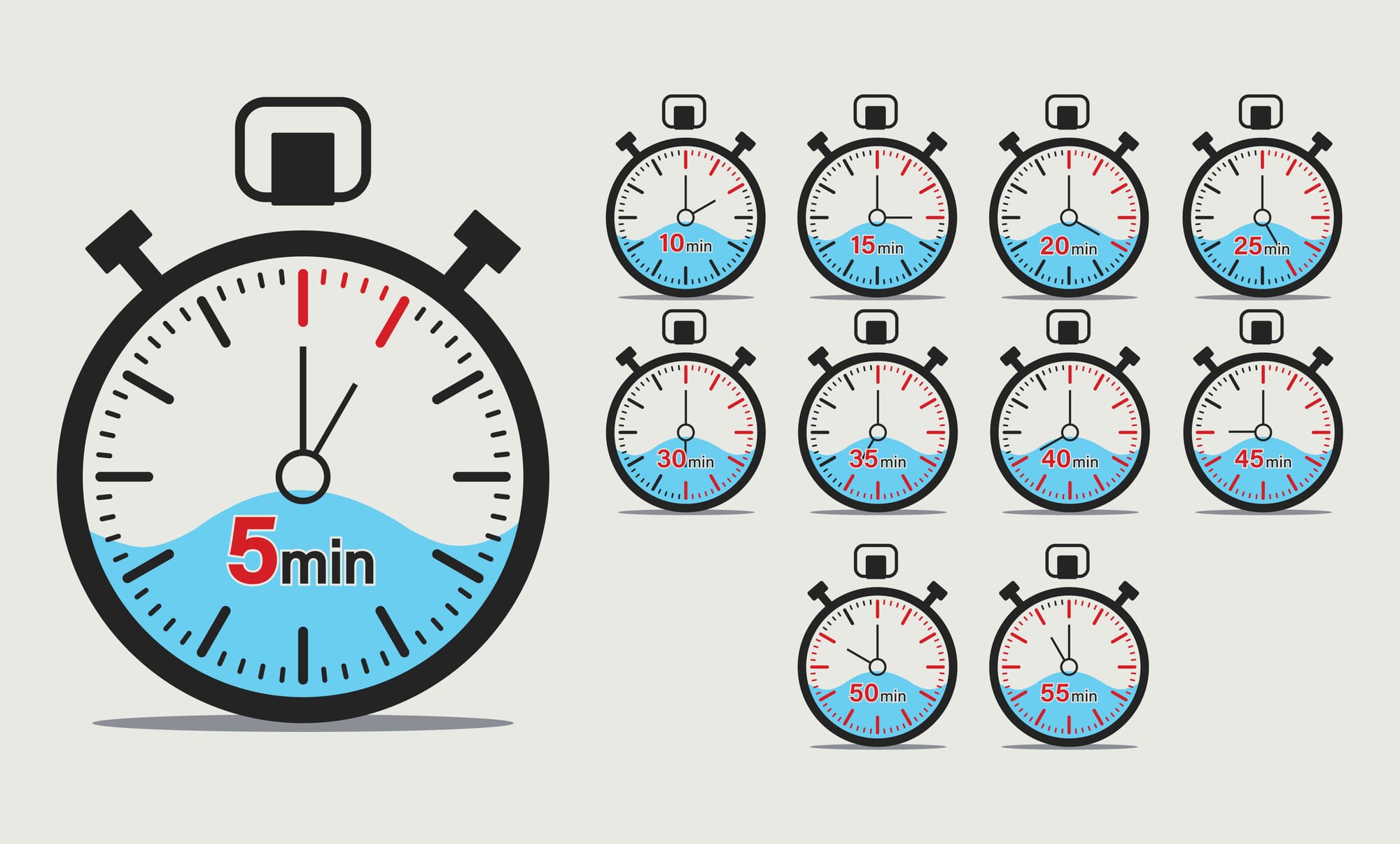
What it is: Tell yourself you only have to work for five minutes. Just five. That's it.
Why it works: The hardest part is getting started. Psychologist Peter Gollwitzer's research on "implementation intentions" shows that having a specific, simple plan (like "I'll work for just 5 minutes") dramatically increases follow-through. Once you begin, your brain usually wants to keep going.
Student example: Ravi had a 10-page paper to write. He felt so overwhelmed, he avoided it for days. Then he told himself: "Just open the file and write for five minutes." After writing the first sentence, he kept going for two hours.
Try this: Choose a task you've been avoiding. Set a timer for 5 minutes. You can stop after that, but chances are, you won't want to.
If this isn't working: You might be setting the bar too high. Try 2 minutes instead, or just commit to opening the document/book without writing anything. Sometimes the resistance is that strong—honor it and start even smaller.
2. The Environment Reset: Change Your Space

What it is: Clean your study space. Go somewhere new. Turn off distractions.
Why it works: Your environment affects your focus more than you might realize. Research in environmental psychology shows that cluttered, noisy spaces increase cortisol (stress hormone) levels and make concentration significantly harder.
Student example: Lina always studied in her dorm room but kept getting distracted by her phone and roommate. She went to the library, found a quiet corner, and left her phone in her bag. Suddenly, studying felt easier.
Try this: Find a quiet, organized place just for studying—like a library, study room, or even a café. Keep it clean, well-lit, and distraction-free.
If this isn't working: Your "perfect" study spot might not actually suit your work style. Some people need background noise, others need complete silence. Experiment with different environments—cafés, libraries, outdoor spaces—until you find what genuinely helps you focus.
3. Task Deconstruction: Break It Into Tiny Steps

What it is: Turn big, scary tasks into small, simple actions.
Why it works: Goal-setting research by Edwin Locke and Gary Latham demonstrates that breaking large goals into specific, smaller sub-goals increases achievement rates by over 90%. Big tasks trigger our brain's threat detection system, while small steps feel manageable and create momentum through quick wins.
Student example: Zhou had to make a presentation in English. Instead of trying to do everything at once, he wrote a checklist: choose topic → make outline → create slides → practice intro → practice with a friend. He finished early and felt confident!
Try this: Take a big task and list out every tiny step. Focus on just one step at a time.
If this isn't working: Your steps might still be too big. If "write introduction" feels overwhelming, break it down further: "write first sentence," "find one supporting example," "write topic sentence." Keep going smaller until each step feels completely doable.
4. The Accountability Lock: Don't Do It Alone

What it is: Tell someone your plan. Set a time to check in.
Why it works: Social psychology research consistently shows we're more likely to follow through when someone else knows about our goals. This phenomenon, called "social accountability," taps into our fundamental need to maintain consistency with our public commitments.
Student example: Maria and her classmate made a deal: every Monday, they would check in on their weekly writing progress. Even when she didn't feel like working, Maria didn't want to let her friend down, so she kept writing.
Try this: Find a classmate, roommate, or friend. Tell them your goal and agree on a time to check in. You can even study together!
If this isn't working: you might have chosen the wrong accountability partner. Some people need gentle encouragement, others need firm deadlines. Find someone whose style matches what actually motivates you, ,not just who's most convenient.
5. The Energy Match: Use Your Best Hours

What it is: Work when your brain works best.
Why it works: Chronobiology research reveals that cognitive performance varies dramatically throughout the day based on your individual circadian rhythm. Studies show that working during your peak hours can improve productivity by up to 50%. You're not lazy—you're just fighting your biology!
Student example: Ahmed realized he was always tired after dinner, but full of energy in the morning. He started waking up an hour earlier to work on his assignments—and finished them faster than ever before.
Try this: Notice when you feel most focused—morning, afternoon, or evening. Plan your most important work for that time.
If this isn't working: You might not have accurately identified your peak hours, or your schedule might not allow for ideal timing. Track your energy levels for a full week, noting patterns. If you can't work during peak hours, identify your "second-best" time and protect that instead.
6. Strategic Incompletion: Leave a Cliffhanger

What it is: Stop working when you know what comes next, not when you're completely stuck.
Why it works: This strategy leverages the "Zeigarnik effect," first discovered by psychologist Bluma Zeigarnik in 1927. Our brains are naturally wired to remember unfinished tasks more clearly than completed ones. When you stop mid-flow rather than at a natural stopping point, your brain keeps processing the work subconsciously, making it much easier to resume because you know exactly where you left off.
Student example: Sara was reading a dense research paper for her psychology class. Instead of finishing the entire article when she got tired, she stopped right before the conclusion section and wrote herself a note: "Next: read conclusion and connect to hypothesis from intro." The next day, she jumped right back in because she knew exactly what to do and was curious about how the study ended.
Try this: Next time you're working and feel your energy dropping, don't push through to a "clean" stopping point. Instead, stop when you can clearly see the next step. Write a quick note: "Next step: write conclusion" or "Continue from here: analyze data from Table 2."
If this isn't working: You might be stopping at points that are actually too difficult or unclear. The key is stopping when the next step is obvious and manageable, not when you're confused or stuck. If you return to work and don't know what to do, try stopping earlier in the process next time.
7. The Reward Stack: Make It Fun

What it is: Pair something boring with something fun.
Why it works: This uses the "Premack Principle" from behavioral psychology: pairing a low-probability behavior (studying) with a high-probability one (enjoying your favorite things) increases motivation. We're naturally more motivated when there's an immediate, enjoyable reward.
Student example: Jun only let himself drink bubble tea while reviewing vocabulary flashcards. He started looking forward to his study time!
Try this: Only listen to your favorite music, drink your favorite coffee, or wear your comfiest hoodie while doing your most boring task.
If this isn't working: Your reward might be too distracting or not motivating enough. If music makes it hard to focus, try a physical reward instead (special snacks, comfortable clothes). If the reward isn't exciting, choose something you genuinely look forward to—but only allow it during work time.
8. Consequence Creation: Make Delay Uncomfortable
What it is: Give yourself a small penalty for procrastinating.
Why it works: Behavioral economics research on "loss aversion" by Daniel Kahneman shows that people are more motivated to avoid losses than to achieve gains. Creating a meaningful consequence leverages this psychological principle—sometimes we need gentle pressure to overcome inertia.
Student example: Olivia told her roommate, "If I don't submit my application by Friday, I'll clean the bathroom every week this month." She submitted it Thursday night.
Try this: Pick a small "consequence" that motivates you. Tell a friend. Be honest—and follow through.
If this isn't working: Your consequence might be too harsh (creating more stress) or too mild (easy to ignore). The sweet spot is something annoying enough to motivate you but not so severe it creates anxiety. Also, make sure you actually follow through—empty threats stop working quickly.
Bringing It All Together: How to Choose What Works for You
You don't need to try all eight at once. Start with one or two that feel right for your situation.
Here's a simple way to decide:
- Struggle to start? → Try Five-Minute Start or Task Deconstruction
- Always distracted? → Try Environment Reset
- Low motivation? → Try Reward Stack or Accountability Lock
- Tired and foggy? → Try Energy Match
- Keep quitting halfway? → Try Strategic Incompletion
- Always delaying? → Try Consequence Creation
You can also mix and match! For example, break your paper into small parts (Task Deconstruction), then use a timer (Five-Minute Start), and meet a friend at the library (Accountability Lock). Boom—triple combo.
What If Nothing Seems to Work?
If you've tried multiple strategies and still struggle with procrastination, consider these possibilities:
- You might be dealing with perfectionism. Sometimes, procrastination is actually the fear of not doing something perfectly. Try explicitly aiming for "good enough" first drafts.
- The task might genuinely be too difficult. Don't be afraid to ask for help from professors, tutors, or classmates.
- You might need professional support. Chronic procrastination can sometimes be linked to ADHD, anxiety, or depression. Your school's counseling center can help you figure this out.
Final Encouragement
If you're reading this, you're already taking the first step: becoming more self-aware. That's a powerful thing.
Remember: Procrastination is not about being "lazy." It's about fear, stress, and uncertainty—and you're not alone.
You don't have to be perfect. Just consistent. Small wins build confidence, and confidence builds momentum.
You've got this.
Start small. Stay curious. Keep going.
🎯 Stop Procrastinating Toolkit
Identify Your Patterns & Build Your Personal Anti-Procrastination Strategy
Step 1: Identify Your Procrastination Patterns
Select all the patterns that sound familiar to you:
Step 2: Your Current Challenge
Step 3: Choose Your Strategy
• Always distracted? → Environment Reset
• Feel overwhelmed? → Task Deconstruction
• Low motivation? → Reward Stack or Accountability Lock
• Tired and foggy? → Energy Match
• Keep quitting halfway? → Strategic Incompletion
• Always delaying? → Consequence Creation
Step 4: When Will You Start?
Step 5: Your Insights & Questions
Step 6: Article Reflection & Daily Assessment
Step 7: One-Day Procrastination Assessment
Procrastination Moments Today
Each time you catch yourself avoiding a task, fill out one section below. Aim for 3-5 entries throughout the day.
Step 8: End-of-Day Reflection
Optional: Share your info to get personalized coaching from Seth!
Ready to stop procrastinating? Send your plan for personalized feedback!
📋 Copy: Copies your plan to clipboard for easy sharing
💾 Download: Saves as a text file for your records
Send to: seth@looperworks.com
I personally review every plan and send tailored anti-procrastination advice within 48 hours.
Research References
Core Procrastination Research:
- Steel, P. (2007). The nature of procrastination: A meta-analytic and theoretical review of quintessential self-regulatory failure. Psychological Bulletin, 133(1), 65-94.
- Tice, D. M., & Baumeister, R. F. (1997). Longitudinal study of procrastination, performance, stress, and health. Psychological Science, 8(6), 454-458.
Strategy-Specific Studies:
- Gollwitzer, P. M. (1999). Implementation intentions: Strong effects of simple plans. American Psychologist, 54(7), 493-503.
- Locke, E. A., & Latham, G. P. (2002). Building a practically useful theory of goal setting and task motivation. American Psychologist, 57(9), 705-717.
- Zeigarnik, B. (1938). On finished and unfinished tasks. In W. D. Ellis (Ed.), A source book of Gestalt psychology (pp. 300-314).
- Horne, J. A., & Östberg, O. (1976). A self-assessment questionnaire to determine morningness-eveningness in human circadian rhythms. International Journal of Chronobiology, 4(2), 97-110.
- Kahneman, D., & Tversky, A. (1984). Choices, values, and frames. American Psychologist, 39(4), 341-350.